BSN Policies and Procedures
PUBLISHED BY THE COLLEGE OF NURSING AND HEALTH SCIENCES
Admission Requirements for Traditional (BSN) Program
POLICY:
Nursing students pursue professional courses based on knowledge of physical, biological and social sciences and the humanities. Upon successful completion of pre-requisite courses in these disciplines, students are eligible to apply for admission to the upper-division nursing courses.
Starting from the 2023-2024 catalog, students may submit their application upon completing both the University Core Curriculum and BSN Additional Requirements, for admission in Fall or Spring admission cycles.
The TAMIU CSON has adopted the Core Performance standards for Admission and Progression in compliance with the Americans with Disabilities Act. Refer to section V. STUDENT LIFE, above.
PROCEDURE:
1. Students must be admitted into Texas A&M International University and must be a declared nursing major.
2. Completion of all nursing core and support area requirements with a minimum grade of "C" and a grade point average of 3.0 (on a 4.0 scale) is required to be considered for admission into the nursing program. The average GPA of nursing students accepted is typically 3.2 – 4.0.
3. The completion of all five required science courses, with a minimum grade of "C" and a grade point average of 3.0 (on a 4.0 scale) is required to be considered for admission. In the event a required science course of similar content was taken more than once, the science GPA for that course will be determined by averaging the grades.
4. NURS 2321 Pathophysiology must have been completed within five (5) years to the date of admission. In the event a course of similar content was taken more than once, that course will be determined by averaging the grades.
5. All students applying to the BSN program must take the HESI Admission Assessment (HESI A2-Critical Thinking) at their own expense. Aside from pre-Nursing admission overall college GPA and science GPA, a minimum score of 75 for each HESI component in Anatomy and Physiology, overall HESI, and Reading is required to be considered for admission.
6. Students can take the HESI admission assessment twice per admission cycle.
7. All applications must be submitted via NursingCAS, the centralized application for nursing. Create an account at www.nursingcas.org. The CSON must receive the completed application and supporting documentation the Monday after TAMIU Commencement (December for Spring admission and May for Fall admission).
8. For admission purposes, a urine drug and alcohol result must include an 11-panel drug screen, including urine alcohol, utilizing an HHS/SAMSHA-certified laboratory. All positive results must be reviewed by a certified MRO if the donor believes they have a valid medical explanation for the positive result, and the positive can be converted to negative based on a US / Texas 1) prescription, 2) medical documentation, or 3) after MRO consult with the donor's US/Texas medical provider. Students with a positive drug/alcohol screen will not be eligible to enroll in the nursing program. The MD MRO process shall serve for any initial appeals process if applicable to the situation and/or no student shall be able to file any appeal if the drug and alcohol testing policy and MD MRO procedure is not complied with.
9. The Admission and Progression Committee will determine the final selection of students admitted into the program. Students who decline admission should notify the Academic Advisor of their decision. Students who decline admission may reapply in the next admission cycle.
Approved: 05/14/2024 Effective: 05/16/2024
Traditional (Basic) Nursing Re-entry
POLICY:
Re-entry to the CSON is based on seat availability, student’s GPA, and history of critical incidents and/or clinical warning. Re-entry is not guaranteed.
PROCEDURE:
1. Any student withdrawing from any nursing course may be advised to withdraw from all other nursing courses due to concurrent course registration requirements.
2. A student who has withdrawn and intends to re-enter the BSN program must apply and register the immediate semester the course is offered. The CSON Admission & Progression (A&P) Committee may consider exceptions on a case-by-case basis.
3. Students applying for re-entry must be eligible for re-admission into the University.
4. For re-entry, students must submit a petition to the CSON A&P Committee using the special consideration form before the end of the semester.
5. Students re-applying for re-entry must be received the Monday after TAMIU Commencement (December for Spring admission and May for Fall admission).
a. First-semester BSN students applying for readmission into the BSN program will be placed in a separate pool of applicants. Five students with the highest overall grade point average (GPA) may be considered for readmission.
b. Readmission for 2nd, 3rd, and 4th semester BSN students will be based on program grade point average (GPA) (grades from nursing courses completed in the BSN program only) and seat availability.
6. The student must demonstrate clinical proficiency in nursing skills expected from previously completed courses.
7. Recommendations from the CSON College Admission and Progression (A&P) Committee are forwarded to the Chair of the College Nursing Department.
Approved: 05/14/2024 Effective: 05/16/2024
Transfer of Nursing Course Credit From Other Institutions
POLICY:
The Canseco School of Nursing (CSON) may accept transfer nursing coursework earned from other accredited Texas schools of nursing programs. Transfer credit of nursing courses will be determined on a course-by-course basis for equivalency. The Canseco School of Nursing requires that a minimum of twenty-four (24) advanced semester credit hours of the last thirty (30) advanced hours for the nursing degree be completed at Texas A&M International University. These 24 hours must be upper level nursing courses and meet the requirements of the CSON BSN degree plan.
Definition of good standing: the student meets the qualifications to apply to and be accepted from both the transferring institution and transferring nursing program.
PROCEDURE:
1. Students must provide a letter from the transferring institution indicating that the student who is transferring is eligible for reentry and in good standing.
2. Transfer applicants must meet all the University and School of Nursing admission requirements.
3. All nursing courses reviewed for acceptance must be taken within the last 12 months from the date the credit is to be awarded. All nursing coursework must be upper division credit (3000 – 4000) for acceptance.
4. If a course taken at another University does not transfer as a direct replacement, the student may petition the CSON Admission and Progression committee for acceptance as part of the degree plan. Students must apply to the CSON Admission and Progression Committee to be given credit for the nursing courses completed with a grade of “C” or higher at another institution. The course transfer credits must be upper division level. In addition, the following nursing courses within the CSON degree plan must be completed at TAMIU:
A. Cultural Determinants of Health
B. Adult Health Nursing II
C. Community Health Nursing
D. Leadership and Management
E. Capstone
Student’s placement in the curriculum will be determined by the CSON Admission and Progression Committee and reviewed by the Undergraduate Nursing Director and Dean of the College of Nursing and Health Sciences. This decision will be final.
5. Transfer students are accepted based on space availability. Students currently or previously enrolled in the CSON will be given first preference for acceptance.
6. For admission requirements, review Admission Requirements for BSN program policy.
Approved: 04/24/19 Effective: 06/01/19
Leave of Absence Policy
POLICY:
This policy will be applied to students who are going to apply for a Leave of Absence (LOA) and those who are returning to the BSN program after a LOA.
PROCEDURE:
1. The procedure outlined in the TAMIU’s Student Handbook will be used in the application for a LOA.
2. Reasons allowed for a LOA are Health or Family Emergencies.
3. Students should be allowed a LOA for one semester with no extra stipulations.
4. If the student is approved a LOA for 2 long regular semesters, the following are the procedures to follow upon return to the BSN program:
a) The student contacts the Academic Advisor about the intent of returning to the BSN program in writing at least one semester in advance.
b) If the student requests a LOA before entering or completing the first semester, they must pass the required Standardized Entrance Exams with at least a 75. If the student does not attain at least a 75 on any of the Standardized Entrance Exams, they will need to reapply to the nursing program for admission.
c) If the student completed the first/second/third semester before their LOA, they are required to demonstrate knowledge of retention of nursing concepts by scoring an 850 and above on the required Standardized Course Exams in courses completed prior to the LOA.
d) Exams will be administered following the sequence of courses in the program (according to semester).
e) If a student doesn’t obtain a score of 850 or above on the Standardized Course Exams, they will be required to repeat the courses.
f) Should the student decide to reapply in the BSN program, they will be placed in the applicant pool; readmission into the program is not guaranteed.
g) An important exception for students that have completed the first/ second/ third semester before their LOA is, if the student took a class twice before the LOA and does not attain an 850 for that course on the Standardized Course Exam, the student will be dismissed from the program.
5. Students are responsible to purchase access to the Standardized Entrance Exams/ Standardized Course Exams.
Approved: 12/13/2021 Effective: 12/13/2021
Criminal Background Check
POLICY:
All students in the Canseco SON shall have a criminal background check conducted by the Texas Board of Nursing Examiners before acceptance into the nursing program. Once accepted into the nursing program, students will be required to submit a current background check from the Texas Department of Public Safety every academic year, prior to each semester.
Clinical agencies/facilities protocols require clinical background checks for security purposes on all employees, staff, volunteers, and students who supervise care, render treatment, and provide services in clinical settings. The CSON adheres to the policies of all clinical facilities with which the CSON affiliates for student clinical learning experiences.
PROCEDURE:
1. Nursing applicants must undergo a background check through the Texas Board of Nursing (TBON). (insert rules for applying TBON link). Refusal of a background check will result in the student not being considered for entry into the CSON.
2. At the student's expense, verification of criminal background screening (Fast Pass) by TBON is required by the application due date. A student is not accepted into the nursing program until there is a documented clearance from the TBON.
3. Upon applying to the CSON, students must provide the CSON with their legal name, DOB, mailing address, personal email address, and SS#. This information will be sent to the TBON for criminal background screening.
4. Students will be provided a FAST PASS from the TBON and instructed on how to proceed.
5. The student is responsible for payment of both fingerprint scanning services and the cost of the federal background check.
6. Then TBON will do the following:
a. Mail a postcard directly to those students who have a clear background check or,
b. Correspond with those who have a positive background check and request a petition for a declaratory order; or,
c. Correspond with the students who have a rejected fingerprint scan and request another fingerprint scan.
d. The student is responsible for any additional fees.
7. If the CNHS/CSON is notified of a change in the student’s background status that would result in the student’s inability to meet any of the clinical site’s background clearance requirements or eligibility to take the NCLEX, the student must withdraw from the nursing program until the matter is satisfactorily resolved. Upon receipt of the postcard notification from TBON of a clear background check, the student must upload it to their NursingCAS application.
8. The CSON reserves the right to request random criminal background checks at any time, with the student responsible for all costs. Clinical facility or agency sites have the right to deny any student entry into their institution.
9. Once admitted to the CSON, students receiving any communication from TBON regarding sitting for the NCLEX must communicate this information to the CSON.
10. Students who have any criminal behavior that occurs after entry into the nursing program are highly recommended they file a declaratory order petition immediately and not wait until prior to graduation.
11. Once accepted into the nursing program, students will be required to submit a current background check every academic year. The CSON requires a criminal background check from the Texas Department of Public Safety, which is available online.
Approved: 01/09/2026 Effective: 01/09/2026
Substance Use and/or Abuse Screening Policy
POLICY:
The College of Nursing requires all students to undergo a negative 10-panel urine drug screen before admission and during the duration of the nursing program to ensure the safety of the public and comply with the protocols of clinical agencies and facilities. Substance use screens also apply to alcohol. The student is responsible for obtaining the drug screen(s) at their own expense.
PROCEDURE:
1. A company appointed by the College of Nursing will be responsible for conducting drug screening for all students involved in the nursing program.
a. In the event that an individual does not pass the drug screening, the medical reviewer of the company will review and provide a detailed report of the 10-panel drug screen to the director of nursing.
b. Following this notification, the Dean of the College will also be informed to ensure adherence to institutional policies and procedures regarding substance use.
2. Prior to admission, applicants are required to provide documentation of a negative 10-panel drug and alcohol screening to be considered a candidate for the College of Nursing.
3. A student with a positive 10-panel drug or alcohol screen will be ineligible for admission or continuation in the College of Nursing program. Students will be dismissed and will not be allowed to apply for readmission to the College of Nursing program.
4. Any student who refuses to consent to a drug or alcohol screen or fails to provide an adequate specimen will be ineligible for admission or continuation in the College of Nursing Program. Students will be dismissed and will not be allowed to apply for readmission to the College of Nursing program.
5. To ensure the safety of patients, faculty, staff, and students, the College of Nursing reserves the right to require a student to undergo substance abuse testing at the student's own expense if there is reasonable cause to believe that the student is abusing controlled substances.
a. A time frame of 4 hours from an approved list of companies will be provided to complete the required drug screen.
b. A medical reviewer of the company will review and provide a detailed report of the 10-panel drug screen to the director of nursing.
c. Students will not be permitted to attend any clinical placements until the director of nursing has successfully obtained and reviewed all necessary results.
d. If results are positive, the students will be dismissed and will not be allowed to apply for readmission to the College of Nursing program.
6. Reasonable Causes, but not limited to:
a. Observable phenomena, such as direct observation of drug use or the physical symptoms or manifestations of being under the influence of a drug or alcohol, such as, but not limited to, slurred speech, noticeable change in grooming habits, impaired physical coordination, inappropriate comments or behaviors, or pupillary changes
b. Abnormal conduct or erratic behavior, absenteeism, tardiness, or deterioration in performance
c. Report of drug use provided by credible sources
d. Evidence that a student has tampered with a previous drug or alcohol test
e. Possession of drug paraphernalia
f. If a medication or handling discrepancy is discovered
g. If medication may have been stolen or improperly used
h. Other conditions wherein all employees of the facility are required to undergo testing
7. If questionable behavior is observed by an assigned preceptor or other personnel at the agency or facility overseeing a student's clinical experience, which is part of meeting the requirements for a course of study in the CSON, that preceptor or personnel have the authority to take action similar to that of an assigned faculty member to ensure patient safety.
8. A 10-panel drug screen will be valid for 12 months. To maintain eligibility in the College of Nursing, all nursing students will be required to submit a new 10-panel drug screen each year.
9. Clinical facility or agency sites have the right to deny any student entry into their institution.
Approved: 05/04/2026 Effective: 05/04/2026
Declaratory Order Requirements of Texas Board of Nursing
POLICY:
Dr. F. M. Canseco School of Nursing (CSON) adheres to the Texas Board of Nursing rule on declaratory order regarding eligibility for licensure. A petition for a Declaratory Order is a formal disclosure to the Board of Nursing regarding an eligibility issue that may prevent an applicant from taking the NCLEX examination upon completion of a nursing program. The Declaratory Order process permits the Board to make decisions regarding a petitioner’s eligibility for licensure prior to entering or completing a nursing program.
PROCEDURE:
1. A student who has reason to believe that he or she may be ineligible for initial licensure or licensure by endorsement (background check not cleared) may petition the Texas Board of Nursing for a declaratory order as to his or her eligibility.
2. Documentation requirements and forms for Declaratory Order Application may be found at Texas Board of Nursing - Declaratory Order
3. A petition for Declaratory Order must be submitted by the nursing candidate/applicant if one of the following criteria applies. For any criminal offense, including those pending appeal, has the candidate/applicant:
a. Been convicted of a misdemeanor?
b. Been convicted of a felony?
c. Pled nobo contendere, no contest, or guilty?
d. Received deferred adjudication?
e. Been placed on community supervision or court-ordered probation, whether or not adjudicated guilty?
f. Been sentenced to serve jail or prison time? court-ordered confinement?
g. Been granted pre-trial diversion?
h. Been arrested or have any pending criminal charges?
i. Been cited or charged with any violation of the law?
j. Been subject to a court-martial; Article 15 violations; or received any form of military judgment/punishment/action?
**Note: You may only exclude Class C misdemeanor traffic violations.
4. In addition, a petition for Declaratory Order must be submitted if the nursing candidate/applicant answers YES to any of the following questions:
a. Are you currently the target or subject of a grand jury or governmental agency investigation?
b. Has any licensing authority refused to issue you a license or ever revoked, annulled, canceled, accepted surrender of suspended, placed on probation, refused to renew a license, certificate, or multi-state privilege held by you now or previously, or ever fined, censured, reprimanded, or otherwise disciplined you?
c. Within the past five (5) years, have you been diagnosed with, treated, or hospitalized for schizophrenia and/or psychotic disorders, bipolar disorder, paranoid personality disorder, antisocial personality disorder, or borderline personality disorder?
d. Within the past five (5) years, have you been addicted to and/or treated for the use of alcohol or any other drug?
Approved: 05/04/2026 Effective: 05/04/2026
Grading Scale and Grade Rounding Policy
POLICY:
The CSON has adopted a grading scale in line with other Texas schools of nursing:
A-90-100
B- 80-89
C- 75-79 *F- 74 and below
PROCEDURE:
1. Nursing students must achieve a grade of C or higher in both theory and clinical components of a course in order to pass that course and progress in the program. A grade of F in either theory or clinical components will constitute a course failure.
2. To pass a nursing course and progress in the program, a nursing student must attain an exam average (including tests and the final) of 75% or higher. For the WIN courses (NURS 3311, NURS 3312, and NURS 4310), the nursing students must obtain a 70% or higher exam average to progress in the program.
3. To pass a nursing course and progress in the program, a nursing student must attain an overall average of 75% or higher in every nursing course.
Grade Rounding
1. All grade assignments and assessments (exams, quizzes, etc.) will be calculated to the
hundredth (i.e. 2 decimal points). No mathematical rounding is to occur.
2. The exam average total for the course includes all exams and the final exam, and is
calculated to two decimal places and rounded mathematically as follows:
a. Less than 0.45: Round down to next whole number (i.e. 89.44 would be rounded down to 89).
b. 0.45 or greater: Round up to next whole number (i.e. 89.45 would be rounded up to 90).
3. The final weighted numeric course grade is calculated to two decimal places and rounded
mathematically as follows:
c. Less than 0.45: Round down to next whole number (i.e. 89.44 would be rounded down to 89).
Approved: 1/16/2025 Effective: 01/17/2025
Course Policy
POLICY:
Each course syllabus includes a statement of course objectives and clinical competencies that must be achieved for successful completion of the course. These may be more, but not less, stringent than overall school or university policies.
PROCEDURE:
1. A student who believes that their grade was a result of unfair implementation of course policies and /or grading, may file a grade appeal request utilizing procedures noted in the Student Grievance Policy.
Approved: 11/30/16 Effective: 01/04/17
Learning Contract
Policy:
The student Learning Contract establishes a guide that designs effective learning. It is the responsibility of the faculty to provide students with constructive feedback to facilitate the successful completion of course requirements.
Procedure:
1. The Learning Contract will be initiated in every course where the student must take a standardized national exam.
2. The Learning Contract is immediately initiated when the student scores a 75 or below on a periodical course examination in order to remediate students early during the academic semester.
3. During a meeting, faculty and students will identify areas where a student is not meeting standardized goals. The student is expected to complete a series of NCLEX-style questions in order to fulfill the standardized assessment requirements established by the faculty. The lead faculty will determine the total number of NCLEX-style questions to ensure students effectively meet the standardized goals. The lead faculty will include this set of reflective questions in the course syllabus.
4. The faculty, along with the student, will create a Performance Improvement Plan (PIP) to address weaknesses and meet the standardized quizzing goal.
5. A Counseling Form will be completed to document such a meeting and will be placed in the student's electronic file.
Approved: 05/04/2026 Effective: 05/04/2026
Attendance Policy
POLICY:
The College of Nursing adheres to the TAMIU Attendance Rule as stated in the current university catalog. In addition, each course has established specific attendance requirements for both classroom, clinical, and simulation/laboratory activities to comply with accreditation requirements and to promote professional accountability.
PROCEDURE:
1. Each course syllabus will clearly outline the attendance expectations and policies applicable to that specific course. Students are expected to attend all clinical, skills, laboratory, and simulation sessions. Attendance and active participation are essential to meet course and clinical objectives.
2. Failure to appear for a scheduled clinical session, coming unprepared, and/or tardiness are viewed as unprofessional behavior and will be subject to a Clinical “F” Day.
3. Students are expected to be present and engaged during the change of shift report, unless otherwise specified in the syllabus.
4. Missed clinical or lab hours may only be made up with lead faculty approval. Make-up opportunities are not guaranteed and are dependent on clinical site availability and/or faculty scheduling. Documentation (e.g., medical excuse or emergency verification) may be required for excused absences.
5. Attendance and punctuality are viewed as professional responsibilities. Patterns of absenteeism or tardiness may result in a Faculty-Student Conference and the development of a Performance Improvement Plan (PIP). Continued non-compliance may result in failure in the course.
Performance Improvement Plan- Faculty Resource
Approved: 01/09/2026 Effective: 01/09/2026
Artificial Intelligence (AI) Tools
Purpose
The purpose of this policy is to preserve academic integrity, ethical scholarship, clinical safety, and professional accountability within nursing education. Because nursing students must demonstrate independent critical thinking, professional judgment, ethical reasoning, and clinical decision-making, the use of Artificial Intelligence (AI) tools to generate academic or clinical work compromises the development of these essential competencies.
This policy ensures that all submitted coursework reflects the student’s original intellectual effort and supports compliance with professional nursing standards, accreditation requirements, and ethical expectations of the nursing profession.
Policy:
The use of Artificial Intelligence (AI) tools—including but not limited to ChatGPT, Grammarly (GO/PRO)AI, Quillbot, Bard, Copilot, Jasper, or any other text-generating, paraphrasing, or content-creation software—is strictly prohibited in all nursing coursework unless explicitly authorized in writing by the course faculty.
1. Students must complete and submit all academic and clinical coursework using their own independent work, analysis, and writing.
2. Use of AI to generate, rewrite, summarize, paraphrase, or organize content for assignments, discussions, papers, clinical documentation, care plans, or scholarly work constitutes academic misconduct.
3. It applies to all forms of coursework, including but not limited to:
a. Written assignments
b. Discussion board posts
c. Research papers
d. Care plans
e. Clinical paperwork
f. Case studies
g. Posters and presentations
h. Capstone and practicum projects
i. Reference pages
j. Exams and quizzes
4. Prohibited Uses of AI - Students may not use AI for:
a. Writing or generating any portion of an assignment
b. Paraphrasing or rewording content
c. Summarizing articles or research
d. Producing discussion board posts or responses
e. Writing care plans, SOAP notes, or clinical documentation
f. Creating PowerPoint slides or poster content
g. Producing reference pages
5. Source Verification Requirement- Students are required to include direct and clearly accessible links to all sources referenced in their written assignments.
a. The use of automated reference or citation generators (e.g., Zotero, MyBib, Citation Machine) is not recommended and highly discouraged/prohibited to be used due to producing incorrect citations.
b. Citations are to be formatted according to the American Psychological Association manual, following the edition specified in the course syllabus.
c. Students are to take the time to double-check their links to guarantee that they lead directly to the content cited, thereby enhancing the overall quality and trustworthiness of their work.
d. This requirement encompasses a diverse range of materials, including but not limited to journal articles, peer-reviewed studies, credible websites, professional reports, and videos.
e. The links should be formatted in a way that directs faculty and instructors straight to the original source, allowing for convenient verification of citations.
f. Any assignments with broken or non-functional links will receive point deductions, impacting the overall grade as dictated by the lead faculty.
g. References that cannot be verified due to missing or incorrect links, screenshots, or lack of URLs/DOIs will not be counted toward the assignment's reference requirements.
h. Improperly formatting citations and failing to provide verifiable sources may negatively impact the assessment of a student’s work and their demonstration of academic rigor. Such issues will be referred to the TAMIU Honor Code for formal review.
i. This includes, but is not limited to, submission of unverifiable sources, falsified or fabricated references, persistent use of broken or misleading links, or failure to correct issues after written notice.
6. Permitted Uses- The only permitted use of AI is:
a. Brainstorming: Idea generation, questions to consider, themes or angles to explore.
b. Outlining: Structuring your own paper, presentation, or project (e.g., headings, subheadings, sequence of points).
c. Planning tasks: Milestones, timeliness, checklists for your workflow.
7. Instructors have the ability to utilize various methods for assessing the authenticity of submitted work, including but not limited to:
a. Employing AI-detection software to analyze the text for signs of machine-generated content.
b. Conduct writing pattern analysis to identify inconsistencies in style or voice.
c. Document version histories that can provide insights into the evolution of the work as it was developed.
d. In-class writing samples provide a valuable contrast to the materials that have been submitted for evaluation.
e. Oral defense to assess if students can demonstrate their understanding and ability to explain the content that was submitted.
8. Assignments suspected of AI use will be reviewed and investigated by lead faculty.
9. Violations and Consequences - Use of AI in violation of this policy constitutes academic dishonesty and will result in:
a. First offense – Reporting to TAMIU Honors Code, formal writing, student counseling with faculty and program coordinator/director, and a zero (0) in the assignment.
b. Second offense - Reporting to TAMIU Honors Code, formal writing, student counseling with faculty and program coordinator/director, a zero (0) in the assignment, and failure of the course.
c. For a third offense or any serious violations, the matter may be escalated to the Nursing Chair and the Dean.
Approved: 01/15/2026 Effective: 01/15/2026
Examination Policy and Guidelines
POLICY:
Accurate assessment of knowledge and competencies is crucial to ensure that students process the necessary information for safe practice in clinical settings. Accurate and valid test data are also necessary to provide students with practice prior to the licensure examination; most nursing course examinations use an NCLEX format, which is different from other methods of testing. Test items assess the student’s ability to apply and analyze knowledge learned in the course.
The purpose of this policy is to ensure fair, consistent, and secure testing practices for all nursing students during examinations. The policy promotes academic integrity, professional conduct, and an environment conducive to accurate assessment of knowledge, skills, and critical thinking required for safe nursing practice.
PROCEDURE:
1. All face-to-face class examinations are proctored in a designated, supervised testing area. All Exam dates and formats will be communicated in the course syllabus.
a. Students must sit in assigned or randomized seats as directed by the instructor or proctor.
b. All personal belongings, including bags, watches, and phones, must be stored in a designated area away from the testing computer site.
c. Students are expected to arrive at least 15 minutes before the scheduled start time. Late arrivals of more than 15 minutes without notice may not be admitted and will be considered a missed exam.
d. All materials brought into an exam must be left in an area designated by the proctor. The faculty or designated proctor will provide students with a pencil and sheet of paper, if allowed.
e. Students may wear coats or jackets during the examination period at the discretion of the proctor. All long sleeves should be rolled up to the forearms. The lead faculty will determine what additional aids will be allowed or used during the examination.
f. No food or drinks are allowed during the examination period.
g. Restroom use during testing will be documented and allowed at the faculty’s discretion.
h. Prohibited behaviors include:
i. Copying, sharing, or discussing the exam before, during, or after an exam.
ii. Using unauthorized aids (e.g., notes, devices, online resources)
iii. Impersonating another student or allowing someone else to take an examination.
iv. Recording or photographing test materials.
v. Talking, note sharing, or any form of collaboration.
i. Students must complete required computer system checks before the test. The use of a secure testing platform (Lockdown Browser) is mandatory. Once logged in, the student will no longer be able to leave the testing site without notifying the faculty or the proctor. Any form of communication with other students during this time will constitute a violation of the Academic Conduct of the TAMIU Honor Code Rules.
j. If the proctor suspects any sharing of information during an examination, all students involved will receive a ZERO (0) on the examination or quiz and are subject to Article 7 Violations of Academic Conduct of the TAMIU Honor Code Rules. This includes:
i. Students in possession of cell phones or any other electronic device during an examination (i.e., mobile phones, smartwatches, earbuds, or tablets).
ii. Students found obtaining or suspected of obtaining information from sources other than what has been allowed by the faculty or proctor.
2. Professional conduct during testing.
a. Students are expected to:
i. Demonstrate honesty, integrity, and respect.
ii. Follow all directions given by faculty or proctors.
iii. Maintain a quiet and orderly testing environment.
iv. Adhere to conduct and professional standards during testing.
3. All exam materials are the property of the Dr. F. M. Canseco School of Nursing.
4. A student who is removed from a quiz or examination for suspected sharing of information may be asked to leave the examination area and will receive a Zero (0).
5. Any student who must be absent from an examination must notify the lead faculty PRIOR to the examination. The lead faculty shall be notified in a written format, preferably via Blackboard Email, that includes a date and time. Students are responsible for providing satisfactory evidence to faculty members of their absence. The faculty member will decide if the excuse is valid and may provide the following option.
a. The weight of the missed exam may be added to the student’s final examination, ONLY upon lead faculty approval. Students who fail to notify the lead faculty before the examination period will not be allowed to carry the weight of the missed exam to their final exam; thus, they will receive a Zero (0) for the missed exam.
6. Only one exam can be missed and allowed to count toward the final exam weight. Any other missed exam(s) will be assigned a grade of ZERO (0).
7. Students who need to leave the examination area prior to completion will be requested to leave all testing materials with the proctor, and the examination is considered completed. Students may not leave the examination area without the proctors’ acknowledgement.
8. After the examination period, all examination materials (exam, additional work paper) shall be submitted to the proctor. Students who leave the exam room with any examination material, as a result of their actions, will earn a grade of zero (0) for the exam.
9. Examination grades will be posted per the TAMIU student handbook or course syllabus.
10. Students requiring accommodations must contact the Office of Disability Services.
11. Course faculty may elect to establish other requirements at their discretion, but in no case will these requirements be less stringent than those in this policy.
12. No exam grade shall be dropped when determining the overall course grade.
13. Pop quizzes may be given at the discretion of the lead faculty.
14. The final exam must be taken at the time specified in the course syllabus. If a student is unable to attend the final exam, the student must notify the lead faculty BEFORE the exam takes place. This notification should be submitted in writing, ideally through Blackboard Email, and must include the date and time of the absence. If a student misses the final exam, the lead faculty may, at their discretion, arrange a makeup exam with similar content on a designated date and time
15. Any student with a conflict in exam schedule due to University business (e.g., UIL, athletics) must refer to the TAMIU catalog.
Approved: 01/09/2026 Effective: 01/09/2026
Student Counseling
POLICY:
It is the responsibility of faculty to provide students with constructive feedback to facilitate successful completion of course requirements.
PROCEDURE:
When faculty identifies an academic or behavioral issue that could negatively impact successful completion of a course, the faculty will arrange a conference meeting with the student.
1. The faculty will identify the problem(s), and with student input, develop a plan of action to correct the problem. The plan of action will be documented on a Counseling Form.
2. A Counseling Form may be used to provide recognition for a student who demonstrates excellence in class or clinical.
3. Signature from the student and faculty will be obtained on the Counseling Form.
4. The signed Counseling Form will be place in the student’s file.
Approved: 11/30/16 Effective: 01/04/17
Student Grievance
POLICY:
It is important that students be given the right to be heard. A nursing student who wishes to appeal a grade or file a complaint may do so in a structured manner.
PROCEDURE:
1. The student must first attempt to resolve any conflict with the faculty member or lead faculty of the course. This should be done within 2 weeks of discovery.
2. If the conflict is not resolved, the matter will be referred to the Undergraduate Program Coordinator.
3. If the Undergraduate Program Coordinator cannot resolve the matter, the student may petition to the Undergraduate Program Director.
0. If the matter is not resolved by the Undergraduate Program Director, the matter will be referred to the Dean of the CONHS.
4. If the conflict involves a course grade, then CSON Course Policy is implemented.
Approved: 11/30/16 Effective: 01/04/17
Incomplete, Withdraw, and Dismissal
POLICY:
Dr. F. M. Canseco School of Nursing (CSON) follows the general policies of Texas A&M International University, as outlined in the catalog, with respect to Incomplete grades, Withdrawal, and Dismissal.
PROCEDURE:
1. Students must achieve a “C” or better in each nursing course.
2. A student may not continue in subsequent courses for which the failed course is a prerequisite until a minimum grade of “C” has been achieved.
3. A student receiving an “F” grade in either the theory or the clinical portion of any nursing course will fail that course.
Incomplete Grade
Students who are passing the theory portion of a course but are missing coursework, such as a term paper, examination, clinical hours, or other required work, must collaborate with the faculty of record for the issuance of an “Incomplete” grade.
1. The Incomplete grade is not given as a substitute for a failing grade.
2. The Incomplete grade is not a means of raising a grade by doing additional work after the period for grade submission and the semester is over.
3. Students must be passing the course for which an Incomplete grade is being issued.
4. The student initiates the request for an Incomplete grade after the course withdrawal date and before the end of the semester.
5. Students receiving an “I” (Incomplete) in a nursing course may not progress to courses for which that course is a prerequisite.
Withdrawal
A Withdraw (W) is recorded when a student has formally dropped or withdrawn from the University by the deadline indicated in the official University calendar.
1. Any NURS course can only be repeated once. A withdrawal and/or a failure constitutes an attempt.
2. A withdrawal from all courses within the same semester will constitute one withdrawal occurrence, only if at the time of withdrawal, the student has a passing test average in each of the courses.
3. A student failing two (2) or more courses at the time of withdrawal in the same semester will constitute one “F” in the CSON program status, and re-entry to the CSON program will be determined by the Admission and Progression (A&P) Committee.
4. A student who accumulates two (2) failing withdrawals in any of the four (4) semesters in the CSON program will constitute one “F”. The A&P Committee will determine re-entry status to the CSON program.
5. Any withdrawals or failures of courses will be documented/recorded in the electronic student portfolio.
6. For matters requiring special attention, please refer to the Traditional (Basic) Nursing Re-Entry policy.
Dismissal
Under certain circumstances, students will be permanently dismissed and not considered in good standing. If dismissed, students will not be considered for re-entry into the CSON.
1. Two course failures in any nursing course at any time during matriculation in the nursing program.
2. A fourth withdrawal failing from any nursing course at any time during matriculation in the nursing program.
3. Violation of University and/or CNHS policies, as outlined in the University Catalog and BSN Student Handbook.
4. For matters requiring special attention, please refer to the Traditional (Basic) Nursing Re-Entry policy.
Approved: 05/04/2026 Effective: 05/04/2026
NCLEX Preparation Program
POLICY:
The Canseco School of Nursing has adopted a comprehensive program as an assessment of student learning and preparation for success on the NCLEX-RN® licensing examination.
The learning and testing material is designated to increase student confidence in computer based testing and to improve application of nursing process, critical thinking skills, and competencies required of new graduates in nursing to pass the NCLEX-RN.
Our goal is to assure that students are well prepared academically and experientially for the licensing examination and practice in the rapidly changing healthcare environment.
PROCEDURE:
1. Purchase of the NCLEX Preparation Program throughout the program is mandatory.
2. Completion of all assignments/assessments/proctored exams is designated in each course syllabus which falls within a given semester.
3. Each undergraduate nursing student is to meet the course requirements, receive a grade and progress through the undergraduate curriculum.
4. In addition, students are required to attend the assigned NCLEX Review(s) during the final semester of the nursing program.
Approved: 11/30/16 Effective: 10/3/21
Student Clinical Role
POLICY:
Nursing courses include a variety of clinical activities. Clinical activities involve diverse settings in the community. The purpose of the clinical experience is to provide students with the opportunity to integrate theory and practice. Students will be placed in a variety of agencies where they will focus on specific activities as indicated by specific clinical assignments.
PROCEDURE:
1. Students represent the CSON at Texas A&M International University to the agency and to the community at all times they are in the clinical area.
2. Students are expected to function within the framework of the Nurse Practice Act of the State Board of Nursing, in which the student has clinical assignments. The list of State Boards of Nursing Nurse Practice Acts can be downloaded from https://www.ncsbn.org/npa.htm
3. Students are expected to function within the framework of the American Nurses Association (ANA) Code for Nurses. Students may download the Code for Nurses from http://www.nursingworld.org/ethics/chcode.htm
4. When in the student role, you must remain in that role. Clinical skills must not be performed unless they are part of your student assignment and approved by your clinical instructor.
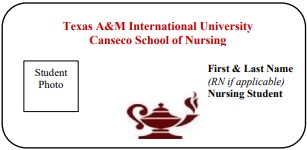
5. Adherence to Texas BON regulations requires that a TAMIU student ID be worn at all times in the clinical setting. The student ID can be obtained from Campus Card Services located in the Zaffirini Student Success Center.
6. Students are required to provide proof of health insurance to participate in the clinical experience. The absence of health insurance can impact the placement of students in specific clinical facilities.
Approved: 11/10/2025 Effective: 11/11/2025
Student Professional Dress & Appearance Policy
POLICY:
Student Clinical Role
All students will adhere to the dress code for clinical rotations. The lead or clinical instructor can dismiss any student for not complying with the required dress code, resulting in the student receiving a clinical F for the day.
PROCEDURE:
1. Professional attire for the hospital clinical experience or assignments requires students to wear a neat, clean, burgundy nurse’s uniform of appropriate size. The pants cuff should rest on the top of the shoe. No capri, leggings, or spandex pants are permitted. The school of nursing has approved the following uniform style:
A. Women’s Scrub Top:
I. Women’s Mandala Style 6 Pocket Top https://mandalascrubs.com/collections/all-womens-scrubs/products/6-pocket-top-wine
II. Women’s FIGS Casma Three-Pocket Scrub Top Women's Casma Three-Pocket Scrub Top™ - Burgundy · FIGS
III. Women’s JAANUU Cesi Slim UltraSOFT Scrub Top Cesi Slim UltraSOFT Scrub Top - Burgundy – Jaanuu
IV. Women’s JAANUU Kass Slim 4-Pocket UltraSOFT Scrub Top Kass Slim 4-Pocket UltraSOFT Scrub Top - Burgundy – Jaanuu
B. Women’s Scrub Pant:
I. Women’s Mandala Style 9 Pocket Bottom https://mandalascrubs.com/collections/all-womens-scrubs/products/9-pocket-cargo-pants-wine
II. Women’s FIGS Kade Cargo Scrub Pants Women's Kade Cargo Scrub Pants™ - Burgundy · FIGS
III. Women’s JAANUU Xenos UltraLITE Knit Waist Scrub Pant Xenos UltraLITE™ Knit-Waist Scrub Pant - Burgundy – Jaanuu
IV. Women’s JAANUU Xenos Essential Knit-Waist Scrub Pant Xenos Essential Knit-Waist Scrub Pant - Burgundy – Jaanuu
C. Men’s Scrub Top:
I. Men’s Mandala Style 3 Pocket Top https://mandalascrubs.com/collections/mens/products/mens-three-pocket-top-wine
II. Men’s FIGS Leon Three Pocket Scrub Top https://www.wearfigs.com/collections/burgundy-scrubs-mens/products/mens-leon-scrub-top?color=Burgundy
III. Men’s FIGS Chisec Three Pocket Scrub Top Men's Chisec Three-Pocket Scrub Top™ - Burgundy · FIGS
IV. Men’s JAANUU Platt 3-Pocket Scrub Top Platt 3-Pocket Scrub Top - Burgundy – Jaanuu
D. Men’s Scrub Pant:
I. Men’s Mandala Style 7 Pocket Bottom https://mandalascrubs.com/collections/mens/products/mens-7-pocket-cargos-wine?country=US
II. Men’s FIGS Axim Cargo Scrub Pants Men's Axim Cargo Scrub Pants™ - Burgundy · FIGS
III. Men’s FIGS Pisco Basic Scrub Pants Men's Pisco™ Basic Scrub Pants - Burgundy · FIGS
IV. Men’s JAANUU Rhodes UltraLITE Straight-Leg Scrub Pant Men's Pisco™ Basic Scrub Pants - Burgundy · FIGS
V. Men’s JAANUU Rhodes Everyday Straight-Leg Scrub Pant Rhodes Everyday Straight-Leg Scrub Pant - Burgundy – Jaanuu
2. Uniform tops must have the approved school logo embroidered on the left upper chest of the top.
3. Professional attire for out-of-hospital clinical experience or assignments requires a solid maroon polo shirt, black hemmed slacks, and clean neutral color (no bright or neon) shoes. The slacks should rest on the top of the shoe. No cargo, capris, leggings, or spandex pants are permitted.
4. The student may wear a short-sleeved or three-quarter white undergarment or undershirt with their burgundy uniform. Black short-sleeved or three-quarter undergarments or undershirts will be permitted only with the maroon polo shirt (i.e., out-of-hospital clinical experiences). Long-sleeved garments are not permitted.
5. Select out-of-hospital clinical experiences that may require casual attire. A TAMIU (maroon, grey, or white) T-shirt and knee-length khaki walking shorts or khaki slacks are permitted. Canvas tennis shoes are allowed for these clinical experiences. No jeans are allowed. The lead faculty for the course will determine attire for these selected clinical experiences.
6. Student ID: In the student role, you must dress professionally and display your TAMIU student name tag with a clear picture and name fully visible above chest level. Student IDs are to be clipped to one’s uniform. ID strings or cords are considered unsafe and are not permitted.
7. Hair must be tied back and up from the face. Extreme hairstyles, exotic colors, or materials distracting from the professional image are unacceptable. Braids, hair buns, and a secure ponytail that does not touch the collar or fall toward the face are acceptable. Bangs must be pinned back at all times. Plain barrettes or hair clips are accepted. No ribbons, flowers, or ornate headbands are permitted. Men shall be cleanly shaven. Beards and mustaches must be neatly trimmed, not touching the student’s uniform.
8. Fingernails: Nails must be clean, trimmed, and short length so as not to injure clients. Nail polish and artificial nails are prohibited.
9. Shoes: Clean, stain-resistant material shoes must be worn with the burgundy uniform. White socks or hosiery are required with shoes. Black shoes are to be worn with black slacks. Black socks or dark hosiery are required with black shoes. Low-heeled shoes are required to allow for quick movement.
A. Shoes that cover the top of the foot are required.
B. No canvas shoes, clogs, crocs, open-heel, slip-on shoes, or open-toe shoes are permitted. Canvas tennis shoes are allowed, as noted in No. 5 above.
C. Shoelaces must be clean and the same color as the shoe, and not drag on the floor.
10. Jewelry: No rings except a plain band should be worn during client contact. No necklaces or bracelets with stones are permitted. One pair of small stud earrings may be worn if the ears are pierced. A watch with a second hand must be worn.
11. Tattoo/skin piercing: All tattoos, skin piercings, and ear gauges MUST be covered or removed. Other visible piercings, including tongue studs, are not permitted.
12. Personal/Cosmetics: Students must exercise good personal hygiene. Avoid perfume, aftershave, or cologne because this provokes allergic reactions in patients.
13. Accessories:
A. Bandage scissors, penlight, 6-inch hemostat (Kelly forceps), pen with black ink, pill cutter, pill crusher, and a stethoscope (bell and diaphragm are standard equipment and should be taken to each hospital clinical experience or designated assignments.
B. Bring only items necessary to the clinical setting (paper, pen, guidelines, etc.). Leave purses and all valuables or bulky items at home. No sunglasses, baseball caps, or headgear are permitted.
14. Gum: No gum chewing is allowed while in uniform.
15. Electronic equipment is not permitted in the clinical setting. This includes cell phones, smartphones, smartwatches, laptops, and tablets. Electronic equipment is not allowed on your person during the clinical experience. Lock valuables in your car during clinical.
16. Tobacco Use: No tobacco products should be used immediately before or during clinical times. The smell of smoke lingers in hair and clothing, which may provoke breathing problems for patients and colleagues
17. The Policy and Procedure committee will assess and approve those students who may need accommodations in uniform appearance related to religious/cultural rituals. These students may request accommodation in writing upon admission into the nursing program and abide by the Policy and Procedure Committee's recommendations throughout their nursing program.
Approved: 10/10/2025 Effective: 10/13/2025
Student Health Requirements for Clinical Nursing Courses
POLICY:
Memorandums of understanding have been established between the Texas A&M International University, CSON and clinical practice facilities. As part of our agreement the SON will abide by the clinical practice facilities policies and procedures. These policies and procedures may include immunization or health guidelines which may be more stringent than what is defined below.
All admitted nursing students shall have all current immunizations including proof of COVID-19 vaccinations and documentation via the immunization tracking system utilized by TAMIU-CSON as required per designated facilities in order to stay in compliance with facilities. Failure in providing documentation prior to first day of class of each semester will result in not being allowed to attend clinical. Non-compliance of required immunizations by clinical facilities will result to non-acceptance into the BSN program or program dismissal.
PROCEDURE:
To be eligible for clinical coursework all nursing students must provide evidence of:
1. Each student will submit records to Verified Credentials (immunization tracking system)
2. Showing proof of the following immunizations and documentation stating history of illness will not be accepted:
a. COVID-19 vaccinations
b. TdaP or Td (tetanus-diphtheria and pertussis)
c. MMR series or positive titer confirming immunity.
d. Hepatitis B series or positive titer confirming immunity.
e. Varicella series or positive titer confirming immunity.
3. Students are required to update immunizations annually and submit documentation to
Verified Credentials which include:
a. Annual tuberculosis (TB) skin test or blood test.
1) If a documented reaction (10mm or more) or a history of documented reaction, a current chest x-ray within the last 3 years, shall be accepted.
2) A tuberculosis questionnaire will be completed annually by all students who are unable to receive a tuberculin skin test, regardless of submission of a chest X-ray.
3) A 2-step testing for first-time admission is required for students that have not had a TB test in the preceding 12 months. However, a TB blood test may be accepted in place of the 2-step test. A chest x-ray is required if the student is symptomatic, regardless of TB skin or blood test result.
4) Students may be required to get more frequent TB skin or blood tests based on clinical facility requirements.
b. Annual influenza administered in the fall.
4. Students who decline to receive any of the required immunizations for religious or other reasons are required to use the Conscientious Exemption Form issued by the Texas Department of State Health Services, under the Texas Administrative Code 97.62 for this program. However, the CSON adheres to the health care institution policies and procedures that we work with. Students may not be able to complete the required clinical rotations hours without a current immunization status.
5. Students are required to provide proof of health insurance obtained from a U.S. health insurance provider.
6. Upon admission to the SON and prior to the first clinical day, students are required to provide proof of current physical examination certifying good health and ability to perform student nursing functions, with no restrictions, obtained from a licensed U.S. healthcare provider.
7. Prior to the beginning of each semester and before the first clinical day of each semester, the student is responsible to maintain their student documentation required for clinical rotations current in Verified Documents. This includes a current immunization status and physical examination, proof of health insurance and a current CPR certification. Failure to do so will result in the student’s inability to complete the required clinical rotations hours. Three (3) clinical absences will constitute failure of the course(s). Clinicals include off-campus clinical sites, simulations, and nursing labs.
8. In the event a student is unable to attend clinical due to an Illness or injury, a medical clearance must be received from a U.S. licensed healthcare provider, releasing the student to return to the clinical settings, without restrictions.
9. In the event a student is unable to attend class due to Illness, the student may be asked to provide a medical clearance from a U.S. licensed healthcare provider, releasing the student to return to the classroom, without restrictions.
Approved: 10/08/20 Effective: 10/08/2020
American Heart Association BLS Providers Certification for Students
POLICY:
All students shall show proof of current American Heart Association (AHA) Health Care Provider (HCP) Basic Life Support certification prior to going into the clinical area each semester.
PROCEDURE:
1. All nursing students must provide a copy of a current AHA Basic Life Support (BLS) Provider certification. This copy will be placed in the student’s electronic file.
2. Students are responsible for maintaining a current BLS certification throughout their nursing program.
3. Students will not be allowed to go into the clinical area without a BLS certification.
Approved: 05/04/2026 Effective: 05/04/2026
Clinical Absence
POLICY:
Clinical hours are essential for students to gain the knowledge and skills needed to function safely as professional nurses. Punctuality is expected in the workplace, as important information affecting patient care is communicated to students at the beginning of each clinical experience. Therefore, being late for clinical, lab, or simulation experiences can jeopardize a student's ability to provide safe nursing care. It’s important to note that lab and simulation experiences are also considered clinical experiences.
PROCEDURE:
1. A clinical absence is defined as a failure to complete or attend an assigned clinical rotation due to:
a. Student illness.
b. An unexpected emergent situation (i.e., death of an immediate family member or significant other).
2. For a clinical absence, due to illness, to be excused, the lead instructor must directly excuse the student, and if so directed, the student must bring a medical release from a licensed U.S. healthcare provider.
3. An unexcused absence is defined as any absence that was not approved by the clinical instructor prior to the clinical experience. An unexcused absence will result in a clinical “F” day.
4. In the event of imminent absence, the student will:
a. Notify the instructor by the instructor’s stated instruction in the syllabus.
b. Notify the clinical agency and/or preceptor, if appropriate, at least one hour prior to the scheduled clinical experience.
5. In the event of an emergency preventing the prior notification, the clinical instructor should be notified within 24 hours of the missed clinical day.
6. Students are expected to arrive on time for clinical/lab/simulation experience and stay for the entire time assigned for that experience.
7. Any nursing student may be sent home from clinical for the following criteria, and this will count as an unexcused clinical absence. An unexcused absence will result in a clinical “F” day.
a. failure to prepare for a clinical assignment.
b. failure to exhibit professional behavior, conduct, or dress.
c. failure to practice safe care.
d. arriving late to the assigned clinical.
8. The student who fails to appear for clinical (no call/no show) will receive an unexcused clinical absence for that day, and this results in a clinical “F” day. Students are required to meet with the lead instructor as soon as possible, and before their next scheduled clinical hours.
9. Absences considered excusable by TAMIU are found in Appendix F: TAMIU Attendance Rule.
a. Students who will be missing class or clinical due to a University-sponsored activity are responsible for identifying their absences to their faculty as far in advance of their absence as possible.
b. The student is responsible for providing satisfactory evidence to the lead instructor prior to any missed class or clinical, to substantiate the reason for absence.
10. Each nursing course with a clinical component has a set number of clinical hours required as part of the course curriculum. Regardless of an excused or unexcused absence, students are required to meet the minimum number of clinical hours defined in the course syllabus.
Approved:11/10/2025 Effective: 11/11/2025
Unsafe Clinical Performance – Patient Safety
POLICY:
Any act, omission, or commission that may result in harm to the patient is considered unsafe clinical practice. This determination is made by the clinical instructor regarding the student’s ability to provide safe, effective, and competent patient care.
An unsafe clinical act includes, but is not limited to, the following:
I. Harm or threats to harm the physical, psychological, microbiological, chemical, or thermal safety of a patient.
II. Disregard of previously mastered principles, learning, or objectives in carrying out nursing skills and/or delegated medical functions.
III. Performing inappropriate acts of omission and/or commission.
IV. Lack of adherence to current CDC guidelines for infection control.
V. Failure to recognize one’s own limitations, incompetence, and/or legal responsibilities.
VI. Failure to accept moral and legal responsibility for one’s own actions, thereby violating professional integrity as expressed in the Code of Nurses, Good Professional Character policy.
VII. The student arrives at the clinical setting in a compromised state, A compromised state includes, but is not limited to, the following conditions:
a. Being under the influence of any substance, drug, or alcohol, whether prescribed, over-the-counter, or illicit, that may impair judgment, coordination, or performance.
b. Exhibiting abnormal or unstable mental health behaviors that interfere with clinical functioning or pose a risk to patient or staff safety.
c. Demonstrating significant sleep deprivation or fatigue that compromises alertness, decision-making, or psychomotor performance.
PROCEDURE:
1. Clinical objectives will be clearly defined for students and clinical requirements stated in the course syllabi, as well as how the clinical grade will be determined.
2. Nursing students will provide nursing care to clients under the facilitation of clinical faculty and supervision of an assigned registered nurse.
3. Students are expected to participate in all nursing care activities that the student has mastered in the skills lab. Students are held responsible for all nursing skills learned from previous courses.
4. When providing clinical care, nursing students are held to the same standards as the RN (i.e., what would the reasonably prudent nurse with the same education and experience do). Students are expected to function within the framework of the Nurse Practice Act of the State Board of Nursing in which the student has clinical assignments. The list of State Boards of Nursing Nurse Practice Acts can be downloaded from https://www.ncsbn.org/npa.htm
5. Students will not check or otherwise be held accountable for the administration of blood or blood products.
6. Faculty may remove a student from the clinical setting if the level of performance does not meet an acceptable level of competency.
7. A failure in the clinical portion of the course results in failure of the course regardless of theory grades.
8. An observation of unsafe clinical act/performance as stated above (I – VII) will result in immediate dismissal from the practicum experience with a clinical “F” day.
Approved: 11/10/2025 Effective: 11/11/2025
Confidentiality / HIPPA
POLICY:
Nurses are entrusted with a great deal of personal information about their patients in order to plan comprehensive care. The student role requires sharing some of this information with faculty and other students during a clinical conference. The Health Insurance Portability and Accountability Act of 1996 (HIPAA) regulations provide federal protection for personal health information held by covered entities and give patients an array of rights with respect to that information. Students and faculty share the burden of carefully protecting the privacy of all persons concerned.
PROCEDURE:
1. Students are provided annual orientations in the classroom and clinical settings regarding HIPAA regulations prior to entering a clinical setting.
2. Students shall not identify patients with any patient-identifying information in any written assignment, i.e., patient full name, patient initials, medical ID, room #s, etc.
3. Students shall not discuss any patient information outside of the assigned clinical conference or class time.
4. Cell phones or other electronic devices are not permitted in the clinical setting. Cell phones are not allowed on your person during the clinical experience unless explicitly stated by faculty.
5. The lead course faculty will engage in a meeting with the student in the event that any breaches of confidentiality arise. Such a violation will result in a Clinical F.
a. Nursing students may also face additional sanctions as stipulated by the clinical agencies.
6. Lead course faculty will advise and report to the BSN Program Coordinator and/or BSN Director.
7. If a resolution is not reached during the meeting with the BSN Program Coordinator and/or BSN Director, these violations will be reported to the Nursing Chair.
8. If a resolution is not reached during the meeting with the Nursing chair, these violations of confidentiality will be reportable to the Dean of the CSON.
Approved: 05/04/2026 Effective: 05/04/2026
Social Networking Policy
POLICY:
To safeguarding the CSON identity, integrity, and overall reputation and to prevent violation of confidentiality, this policy outlines the privacy and confidentiality issues related to students’ social network postings.
Definition: Social Networking
Any activity that involves interaction with other individuals/users in an online environment, i.e., Facebook®, YouTube®, Twitter®, LinkedIn®, Instagram®, Snapchat® and blogs. The use of electronic devices to record pictures, images and other information or data that may be stored, reviewed, or shared with others either immediately or at a future date are considered social networking.
PROCEDURE:
To ensure the mission to protect and promote the welfare of the people of Texas, the Texas Board of Nursing supports both the guidelines and principles of social media use by National Council of State Boards of Nursing (NCSBN) and the American Nurses Association. In keeping with the NCSBN guidelines, the Texas Board of Nursing position is that:
1. Nursing students must recognize that they have an ethical & legal obligation to maintain patient privacy and confidentiality at all times.
2. Nursing students are strictly prohibited from transmitting by way of any electronic media any patient - related image. In addition, nurses are restricted from transmitting any information that may be reasonably anticipated to violate patient rights to confidentiality or privacy, or otherwise degrade or embarrass the patient.
3. Do not identify patients by name or post or publish information that may lead to the identification of a patient. Limiting access to postings through privacy settings is not sufficient to ensure privacy.
4. Do not take photos or videos of patients on personal devices, including cell phones. Follow employer policies for taking photographs or video of patients for treatment or other legitimate purpose using employer-provided devices.
5. Maintain professional boundaries in the use of electronic media. Online contact with patients or former patients blurs the distinction between a professional and personal relationship.
6. Promptly report any identified breach of confidentiality or privacy, to the Lead Instructor, Undergraduate Program Director or BSN Program Director, and the Dean of the CONHS.
7. Students must be knowledgeable of and comply with the clinical agency policies regarding use of clinical agency - owned computers, cameras, and other electronic devices and use of personal devices in the clinical setting.
8. Social networking technology used to share or reflect upon your student nurse experience is strictly prohibited.
9. Violations of confidentiality may result in a clinical “F” day and are reportable to the Dean of the CSON.
Approved: 11/30/16 Effective: 01/04/17
Clinical “F” Day
POLICY:
Unacceptable nursing practice in the clinical setting or unexcused clinical absences may result in receiving a clinical F day, also known as an “F” day. A clinical setting includes any activity for which the student earns clinical hours.
A student who accumulates three (3) clinical "F" days in any clinical course will receive a failing grade (F) for that course. After receiving an F, the student may petition to the Admission and Progression Committee to retake the course in the following semester, provided that there is space available.
A nursing student who accumulates five (5) clinical “F” days during the program will be dismissed from the College of Nursing.
PROCEDURE:
1. Any nursing student may be sent home from clinical for the following criteria, but not limited to:
a. failure to prepare for a clinical assignment.
b. failure to exhibit professional behavior, conduct, or dress.
c. failure to practice safe care.
d. arriving late to the assigned clinical.
2. At the faculty member’s discretion, the student may be removed from direct patient care for the remainder of that clinical day.
3. The lead faculty will inform the student that he/she will receive a clinical “F” day by the end of the clinical day. The lead faculty will notify the student in writing by email.
4. The lead faculty will proceed with making an appointment between the student, the clinical faculty (as applicable).
5. Documentation of the unacceptable behavior will be recorded on a counseling form. The lead faculty will record this clinical "F" day in the College of Nursing drive to track students' unacceptable behavior.
6. The student will be given a copy of the counseling form, along with a copy of the “F” Day Policy. The original form will be forwarded to the College of Nursing BSN Program Coordinator and BSN Program Director for inclusion in the student’s permanent file.
7. When a student receives a second clinical “F” day in a course, the student shall meet with the Course Lead Instructor(s) and the BSN Program Coordinator and/or BSN Program Director, to be informed that three clinical “F” days will result in a grade of F for that course.
8. While in the nursing program, when the student receives a fourth “F” day, the student shall meet with the Course Lead Instructor(s) and the BSN Coordinator and/or BSN Program Director, to be informed that five clinical “F” days will result in dismissal from the College of Nursing.
Approved: 11/10/2025 Effective: 11/11/2025
Clinical Proficiency
POLICY:
To ensure that students possess the cognitive and psychomotor skills to provide safe nursing care, any student out of the clinical setting for one semester or more must demonstrate clinical competency in prior knowledge and psychomotor skills.
PROCEDURE:
1. The student must submit a petition to the CSON Admission and Progression Committee requesting permission to be re-admitted to the same semester that they left the nursing program according to CSON re-admission policy. A student’s petition for special consideration form must be received at least four (4) weeks prior to the beginning of the semester.
2. The CSON Admission and Progression Committee will evaluate the petition and recommend to the Dean of the CONHS that the student request be approved or disapproved.
3. If approved the student will be notified of the date of the clinical proficiency testing. The testing may include, but is not limited to drug calculation, critical decision-making test questions and demonstration of clinical proficiency. Testing must be completed before the first (1st) University defined class day.
4. Student must first pass the clinical proficiency testing before they are allowed to register for any courses.
5. The student will be provided with a blueprint of the clinical competency that they will need to demonstrate.
6. The student will be given a minimum of 5 class days to use the simulation lab to practice skills.
7. If the student does not demonstrate proficiency on the first (1st) attempt, the student will be given a second chance to demonstrate proficiency. The student must first complete a remediation of the areas of deficiency prior to the second chance.
8. If the student demonstrates proficiency during the second demonstration, the student will be allowed to enroll in the requested clinical course(s).
9. If the student does not demonstrate proficiency during the second demonstration, the student will not be allowed to enroll in the requested course(s). Students must first pass the clinical proficiency testing.
10. Any student who is not allowed to enroll in the subsequent course(s) will be given the option to repeat previous semester courses.
11. If the request to re-enter the nursing program of study using the CSON POLICY- Basic Nursing Re-Entry Policy is denied, the student may use the TAMIU Policy, Section 4.02 Disputes over Academic Matters.
Approved: 10/17/13 Effective: 10/17/13
Blood or Body Fluid Exposure
PURPOSE:
Implement a systematic approach for blood or body fluid exposure which includes all elements required by the Occupational Safety Health Administration (OSHA) blood-borne pathogens standard (29 CFR 1910.1030).
POLICY:
The TAMIU, Dr. F. M. Canseco SON is committed to providing a safe and healthful environment for faculty and students. In pursuit of this goal, the following policy is provided to eliminate or minimize exposure to blood-borne pathogens. The CSON recognizes the profession of nursing includes tasks and procedures in which occupational exposure to blood and/ or body fluids may occur. Students are responsible for adhering to standard precautions as governed by the Center for Disease Control and Prevention (CDC). Students have the responsibility to maintain compliance with the recommendations during all clinical settings. Refer to the CDC Standard Precautions at http://www.cdc.gov/.
PROCEDURE:
1. Immediate treatment is provided to the individual at the clinical site where the injury occurs.
The student/ faculty will follow the clinical site Blood-borne Pathogen Protocol.
2. Completion of CSON Incident Report Form is required within 24 hours of incident.
3. The faculty member will accompany the student when completing the clinical facility protocol and is responsible for ensuring that all medical actions required by the facility are performed.
4. In the event the student/ faculty is unable to follow the clinical site Blood-borne Pathogen
Protocol for any reason, the student may:
a. Consult a private healthcare provider and follow the providers’ protocol, or
b. Report to Student Health Services and follow their protocol.
5. In either event, notification of blood testing results will follow facility medical protocol.
6. Any incurred expense is the student’s responsibility.
7. The completed Incident Report Form is forwarded to the Dean of the CONHS and a copy is placed in the student’s file.
Approved: 11/28/18 Effective: 01/01/19
Clinical Incident
POLICY:
Each faculty member is responsible for accurately documenting incidents during clinical activities. Examples of clinical incidents: patient safety incidents, student safety incidents, or unprofessional conduct.
PROCEDURE:
1. The student is required to notify faculty at the time of the event and, if appropriate and applicable, complete the clinical agency’s incident report form.
2. The faculty member is responsible for notifying appropriate agency personnel at the time of the event. The agency-specific protocol will be followed as defined by the clinical facility/agency policy.
a. If a clinical incident occurs on campus, the faculty member must notify Student Services and follow campus protocols.
3. The faculty member will conduct a verbal counseling session with the student and subsequently document the clinical incident in writing within the week following the occurrence.
4. The faculty member will provide the BSN Program Coordinator and/or BSN Director with a copy of the clinical incident and place it in the student’s electronic file.
5. The BSN Program Coordinator and/or BSN Director will notify the Nursing Chair of the CSON of the clinical incident.
6. A copy of the clinical incident report will be forwarded to the Dean of the CONHS.
7. The clinical incident will then be placed in the student’s electronic file.
8. Any incurred expense is at the student’s responsibility.
Approved: 05/04/2026 Effective: 05/04/2026
Simulation Lab
POLICY:
The mission statement of the Dr. F. M. Canseco School of Nursing (CSON) Simulation Lab is to encourage learning and development of clinical judgment and reasoning with the goal of delivering high-quality and safe clinical care.
Objectives of the Simulation Lab
1. Improve clinical and health outcomes for client safety.
2. Enhance clinical learning and performance for nursing students and healthcare professionals at their knowledge level.
3. Provide guidance and leadership to facilitate ongoing use and development of simulation technologies and simulation research
4. Incorporate Evidence-Based Practice into simulation scenario development, implementation, and debriefing through the use of appropriate participant objectives.
Goals of Simulation Lab
1. Demonstrate professional integrity and ethical behaviors at every clinical simulation scenario.
2. Provide a confident and safe learning environment to encourage clinical learning and reduce risk to the client.
3. Create clinical scenarios and simulation objectives achievable within the designated time-frame.
4. Encourage interdisciplinary collaboration for the use of simulation in multiple healthcare environments.
5. Establish remediation practices to promote improvement in skill performances and retention of students.
PROCEDURE:
1. Simulation Laboratory facilities may only be used by the TAMIU students in the presence of CSON faculty or staff personnel in the laboratory.
2. Simulation Lab personnel or designee must supervise use of the lab equipment and manikins at all times.
3. Only those trained in its use may operate simulation equipment. Training for faculty on the manikin’s software and hardware is provided by the Simulation Lab personnel.
4. Request for simulation dates should be submitted on the first day of the final exam week. For spring semester dates, request forms need to be submitted on the first day of December's final exam week. For fall semester dates, request forms need to be submitted on May’s first day of the final exam week.
5. Simulation request forms with complete documentation of simulation lab equipment/supplies needed should be submitted at least 2 weeks in advance to the Nursing Lab Supervisor. No verbal request will be taken. A confirmation email will be sent out to verify that the request can be accommodated.
6. A simulation lab set-up walk-through will be performed one day prior to the scheduled simulation lab activity. The exact time for the walk-through will be determined by the Nursing Lab Supervisor and Course Faculty.
7. High-fidelity simulation labs must be evaluated by the students at the end of the simulation lab using the Simulation Evaluation Form.
8. Instructors are responsible for the direct supervision of their students who are assigned to any learning experience within the lab facilities and settings.
9. Cancellation of any simulation laboratory reservation requires notification to the Nursing Lab staff and via the electronic system as soon as possible in order to make available the time and the space previously reserved.
10. Faculty and students may borrow some educational equipment or media products via the Equipment Check-Out Form. Once this form is submitted and processed, a hold will be placed on the account of the faculty and/or student until the item(s) are returned. All items should be returned within 24 hours unless stated otherwise on the form.
Approved: 05/04/2026 Effective: 05/04/2026
Liability Insurance Requirements
POLICY:
The Dr. F. M. Canseco School of Nursing (CSON) requires all nursing students who have patient contact to have professional liability insurance coverage.
PROCEDURE:
1. All students in the CSON must have professional liability coverage from the University.
2. Liability insurance provides protection for students while they are participating in clinical practicums, as required for academic coursework.
Approved: 05/04/2026 Effective: 05/04/2026
Evaluation of Student Clinical Performance
POLICY:
Students will receive formative clinical evaluations throughout the semester.
PROCEDURE:
1. Each student will receive a written summative clinical evaluation at the completion of each clinical course. This evaluation will be discussed with the student.
2. The student will be asked to sign and date the evaluation before it is filed in his/her permanent record.
3. If for any reason, the student disagrees with the clinical evaluation, the student may submit a petition regarding the dispute with the CSON Admission & Progression Committee.
Approved: 11/30/16 Effective: 01/04/17
Student Evaluations of Faculty, Courses, and Clinical Agencies
POLICY:
All students shall be given the opportunity to evaluate faculty, courses, clinical agencies, and simulation labs at the completion of each course/clinical.
Student evaluation of faculty, courses, clinical agencies, and simulation labs is invaluable to instructors as they strive for excellence in teaching performance. Student input serves to enhance the teaching-learning process by providing faculty with appraisals of areas of strength and areas of needed change and/ or improvement.
A student should regard the evaluation of course faculty as both a privilege and a right, with inherent responsibility for objectivity.
PROCEDURE:
1. For each course, the student will be given the opportunity to complete a student evaluation of a face-to-face course or an online course during the time frame for evaluations provided by the University.
a. Each student's evaluation of the course and instructor, with comments, through the University will be anonymous and confidential.
2. At the completion of each clinical nursing course, students will be asked to evaluate the clinical agency (ies) and each simulation scenario in which they practiced using the electronic evaluation system.
3. A final grade for the course will not be conferred until all students have completed their clinical course evaluations, submitted all required documents, and been verified by the lead course faculty.
4. Clinical course evaluations will be presented in the CSON Assessment and Evaluation Committee.
5. All faculty evaluations will be reviewed and evaluated by the Nursing Chair.
Approved: 05/04/2026 Effective: 05/04/2026
Clinical Supervision by Preceptors
POLICY:
In some situations where the Dr. F. M. Canseco School of Nursing (CSON) students are performing nursing interventions or delegated activities, they will be under the supervision of registered nurse preceptors or other licensed health care professionals.
Registered nurses selected to serve as preceptors shall have a valid Texas RN license and hold a baccalaureate or master’s degree in nursing or be an experienced RN, recognized by the nurse manager and/or faculty as a role model in patient care management and the profession of nursing.
Other licensed health care professionals selected to serve as preceptors shall hold a minimum of a bachelor’s degree in a specialty field.
Students are permitted to perform any function that falls within the scope of nursing practice for which they have received educational preparation and training.
PROCEDURE:
1. Clinical preceptors must be affiliated with agencies that have an Affiliation Agreement and Preceptor Agreement with the CSON.
2. Clinical preceptors will be selected by faculty according to specific course requirements and must demonstrate competence in designated practice areas.
3. Clinical preceptors will be requested to sign a letter of preceptor agreement each semester using the BSN Program Preceptor Agreement form.
Preceptor Evaluation of Student
1. Lead faculty will provide the preceptor with the Preceptor Evaluation of Student form. Lead faculty will use this assessment to evaluate the student’s achievement of clinical objectives. Faculty have the final responsibility for the assessment of a student’s achievement of clinical objectives.
2. At the completion of every semester, the preceptor will evaluate every student they precepted in the clinical area using the Preceptor Evaluation of Student form.
3. Each semester, students will complete a Student Evaluation of Preceptor survey for each of their clinical preceptors.
4. The preceptor’s evaluation of the student will be placed in the student’s electronic file.
5. The Assessment & Evaluation Committee will report the results to the faculty.
Approved: 05/04/2026 Effective: 05/04/2026
Evaluation of Curriculum by Graduates and Employers
POLICY:
To ensure excellence of the programs of the Dr. F. M. Canseco School of Nursing (CSON) and to assist with ongoing curriculum revision at the time of graduation, nursing graduates of the CSON will be asked to participate in a summative evaluation of the program in the form of a survey. Information obtained from the surveys will be used to enhance and revise the curriculum as needed.
PROCEDURE:
1. A Survey of Employment of BSN Nursing Graduates at Time of Graduation and at Six Months will be distributed to all new Traditional (Basic) nursing graduates and Transition (RN/BSN) upon graduation and at 6 months.
2. A Survey of Program Outcomes for Traditional BSN and Transition (RN/BSN) Graduates at Time of Graduation and One Year will be sent via mail or email to all graduates at the time of graduation and one year after graduation. The completed graduate survey will be returned via mail or email to the designated CSON address.
3. An Evaluation of Curriculum by Employer of Traditional BSN and Transition RN/BSN Nursing Graduates One Year after Graduation will be sent via mail or email to employers one year after graduation. The completed survey will be returned via mail or email to the designated CSON address.
4. The results of the surveys will be compiled by the Assessment and Evaluation Committee and reported to the CSON faculty and the Dean.
Approved: 05/04/2026 Effective: 05/04/2026
Graduation Requirements
POLICY:
Dr. F. M. Canseco School of Nursing (CSON) adheres to all general requirements and procedures of the University for Graduation. For deadlines and requirements, see the TAMIU catalog. https://catalog.tamiu.edu/undergraduate-information/academic-regulations/
PROCEDURE:
1. In their final year, the student must verify with their advisor that all requirements for graduation and/or honors have been met.
2. Students are eligible to apply for graduation when the following conditions are met:
a. Completion of required semester credit hours.
b. A cumulative GPA of 2.00.
c. Completion of all clinical studies coursework.
3. It is the student’s responsibility to apply for graduation as per TAMIU policy and procedure.
Approved: 05/04/2026 Effective: 05/04/2026
Nursing Honor Student
POLICY:
Nursing honor students will be provided with the opportunity to work under the mentorship of a faculty advisor in the pursuit of scholarship. The goal is to help students prepare for a terminal independent research based “Honor’s” project in the field of nursing. The final project will consist of both a scholarly written paper and oral presentation(s) at designated conference(s).
PROCEDURE:
1. Upon enrollment in the designated traditional (Basic) nursing coursework (Health Assessment, Basic Skills, Pharmacology and Cultural Determinants of Health Behavior) the Honor student will select a topic of interest related to nursing. This topic will be the focus of the Honor Student’s Project preparation, research, and conference presentation throughout his / her progression in the nursing program.
2. The Honor student will be matched with a nursing faculty mentor based on the topic of interest, and research/ clinical expertise of faculty. The CSON Honors Committee will coordinate this process.
3. The faculty (mentor) and student (mentee) will permanently work on a project across the program, unless both decide to terminate the relationship. In the event of this occurrence, the CSON Honors Committee should be notified to arrange another mentor for the student.
4. A contract will be developed between the faculty and student stating the timelines, research or clinical activities, deadlines of papers, presentation dates, and terminal project.
5. The CSON Honors Committee and the University Honors Program will be notified for non-completion of contracted projects and/or deadlines.
6. It shall be a condition in the contract between faculty and student that each academic year the latter must participate and present her/his project at the Lamar Bruni Vergara (LBV) conference or another agreed upon research conference.
7. The faculty (mentor) must review the project/paper and call for participation prior to granting approval for the student (mentee) to present his/her paper/project at a conference.
8. The student is not allowed to present a project or paper in a conference, local/state/national, without the approval of the faculty.
9. If the project is not yet completed, the student may present the Review of the Literature, instrument/questionnaire development, or initial findings to a research conference (LBV) or elsewhere yearly, and upon final approval of the faculty.
10. Student’s (mentee’s) terminal project must follow the structure of scientific inquiry: Abstract, Introduction, Review of the Literature/Theoretical Framework, Methods, Results/Findings, Discussion, and Conclusion.
a. Abstract: summary of the entire research/clinical project.
b. Introduction: background information, gap in the literature, and significant impact of the topic to the discipline, patient care, and etc. (the “so what” factor).
c. Review of the Literature/Theoretical Framework.
d. Method: qualitative or quantitative.
e. Results.
f. Discussion.
g. Conclusion.
h. References.
Approved: 11/30/16 Effective: 01/04/17
Student Transportation Policy
POLICY:
The purpose of this policy is to promote the safety of the Dr. F. M. Canseco School of Nursing (CSON) student learning experiences when located beyond the confines of TAMIU. It is the responsibility of the CSON to ensure compliance with TAMIU Rule 13.04.99.L1 Student Travel. Students must use sound judgment and follow all state, federal, and/or international laws when traveling. Students are expected to comply with the State of Texas laws on maintaining minimum liability automobile insurance coverage.
PROCEDURE:
1. Students traveling are required to abide by the TAMIU Student Handbook at all times. The Student Handbook can be found online at https://www.tamiu.edu/conhs/handbook-coursecycle.shtml
2. Nursing students are responsible for arranging their own form of reliable transportation, including to and from campus, clinical rotation sites, and other community activities.
3. Lack of transportation will not be accepted as an excused absence for non-attendance or tardiness at an experiential or clinical learning assignment.
4. Students are responsible for covering all gas and parking fees incurred by their mode of travel.
5. Carpooling and cost sharing with fellow nursing students is recommended whenever feasible.
6. Students who travel 25 miles or more from their campus location for an experiential or clinical learning assignment must complete an appropriate student travel form, which must be completed by the Office of Student Orientation, Leadership, and Engagement, prior to the trip. https://www.tamiu.edu/compliance/13.04.99.l1studenttravelrule.pdf
Approved: 05/04/2026 Effective: 05/04/2026
College of Nursing and Health Sciences
Nursing Department
5201 University Boulevard Laredo, Texas 78041
Email: nursing@tamiu.edu
Phone: 956.326.3109
Office Hours:
Monday-Friday: 8 a.m. to 5 p.m.
Saturday & Sunday: CLOSED