x


The Western Hemispheric Trade Keynote Speaker Series presents practical and targeted lectures imparted by distinguished leaders, recognized experts, and outstanding scholars in the trade and business arenas.

The Series brings to the University individuals of exceptional accomplishment and expertise to enhance the academic experience of Texas A&M International University students, faculty, and the community.

We thank IBC Bank and Commerce Bank for their continuous support and sponsorship of this Series.

IBC Commerce Bank Logo

2025-2026 Keynote Speakers

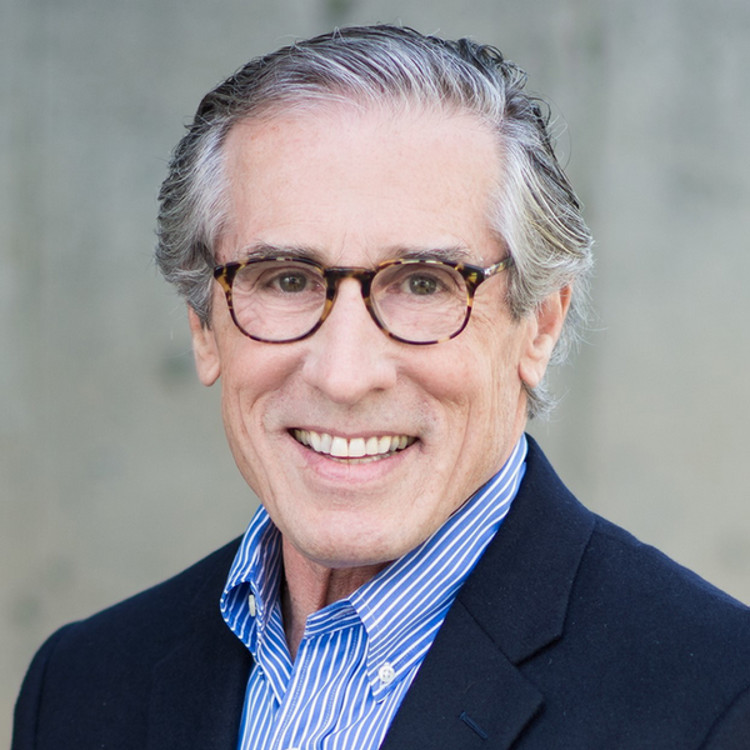
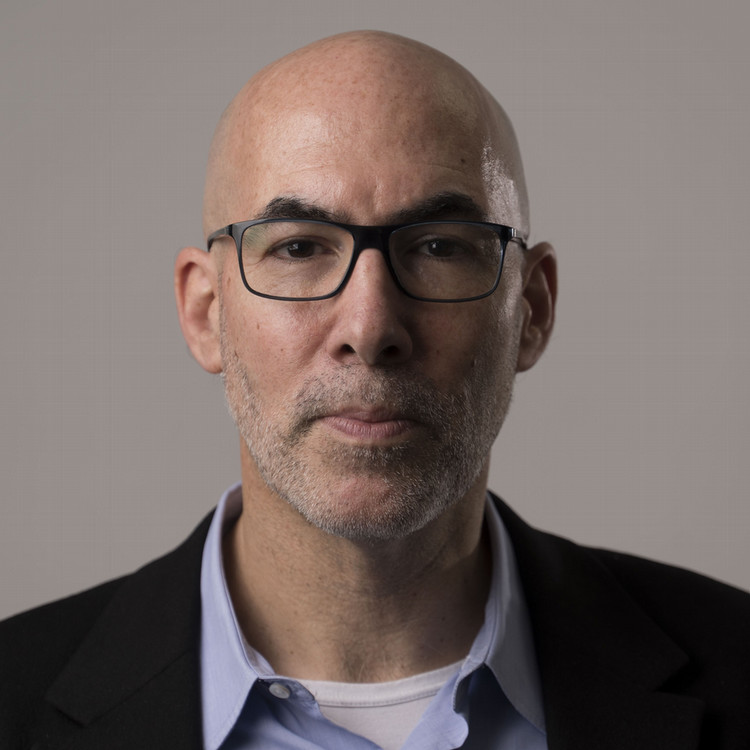
James Gerber, Ph.D.
"Swimming Against the Current:
The Evolution and Challenges of the U.S.-México Border Economy"

Wednesday, March 4, 2026

Student Center Ballroom (STC 203) | 6 p.m.

For anyone unable to attend this in-person event, a live broadcast will be available via Microsoft Teams at https://go.tamiu.edu/gerber.

Dr. James Gerber is currently a senior Fellow in the Center for U.S.-Mexican Studies at the University of California San Diego, and Professor of Economics, Emeritus, at San Diego State University, where he taught for 34 years. His research focuses on the macro-economic history of México, the U.S.-México border region, and U.S.-México relations.

In addition to his recent book, Border Economies: Cities Bridging the US-México Divide (University of Arizona Press, 2024), he is the co-author (with Joan Anderson) of Fifty Years of Change on the US-México Border (University of Texas, 2008), an economic history of financial crises, A Great Deal of Ruin: Financial Crises since 1929 (Cambridge University Press, 2019), and a widely used undergraduate text, International Economics (Pearson Higher Education, 8 editions).

Recent articles in academic journals have examined measures of human development on the US-México border, the role of free trade in the promotion of economic change in México, and the impact on México of the 1907 U.S. financial crisis.


Past Speakers

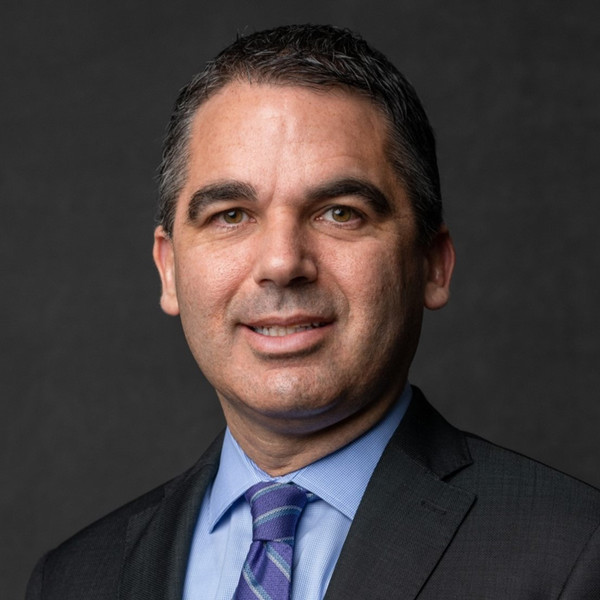
Portrait of Jason Marczak

"A Turning Point in the U.S.-Latin America Relationship: What Might Be on the Horizon?" by Jason Marczak


Recording 

About the topic: 

The U.S. relationship with the rest of the hemisphere is in the midst of potential profound change that could redefine the basis for ties in the years to come. From commerce to security to geopolitics, the underlying basis of longstanding ties may no longer be what drives policy decisions – whether in the U.S. or across the region – in the years to come. What could then be expected as a basis for the relationship, and how might countries adapt to the new dynamics of U.S. ties?


About the speaker:  

Jason Marczak is vice president and senior director at the Atlantic Council’s Adrienne Arsht Latin America Center. He joined the Council in 2013 to launch the center and set the strategic direction for its work. Marczak has 25 years of expertise in regional economics, politics, and development, working with high-level policymakers and private-sector executives to shape public policy.

Under his leadership, the Latin America Center delivers constructive, results-oriented solutions to advance hemispheric prosperity and is a regular venue for heads of state, cabinet-level officials, and other public- and private-sector leaders to build consensus on regional priorities and the broader global linkages. He recently co-authored a strategy for U.S. engagement with the region, co-edited a book on the future of the U.S.-Colombia relationship, and led groundbreaking work on the economic gains of reducing wait time at the U.S.-México border. In 2021, he led the establishment of a Caribbean Initiative at the Atlantic Council. Under Marczak’s direction, the Center has achieved consistent annual growth both in scale and scope while advancing a global vision for its select lines of geographic and thematic programming.

Since 2016, Marczak has been an adjunct professor at the George Washington University’s Elliott School of International Affairs where he teaches on Central America and immigration policy. He was previously director of policy at the Americas Society/Council of the Americas where he worked closely with U.S. and global business executives and was cofounder and senior editor of Americas Quarterly magazine. In 2003, he joined Partners of the Americas to advance work on civil-society engagement in the Summits of the Americas. Marczak held positions at the National Endowment for Democracy and as a legislative aide in the office of then U.S. Representative Sam Farr (D-CA) with a portfolio including trade and foreign affairs.

Marczak frequently provides English- and Spanish-language media commentary and has testified before the U.S. Senate Committee on Foreign Relations and the U.S. House Committee on Foreign Affairs. In 2022, he was invited by the House Financial Services Committee to join a congressional delegation in Barbados and present work to nearly a dozen Caribbean heads of government. In 2023, on the occasion of the 10th anniversary of the Adrienne Arsht Latin America Center, Marczak was presented with the Visionary Leadership Award. He received a master’s degree from the Johns Hopkins University Paul H. Nitze School of Advanced International Studies and a bachelor’s degree from Tufts University. Marczak is a lifetime member of the Council on Foreign Relations.

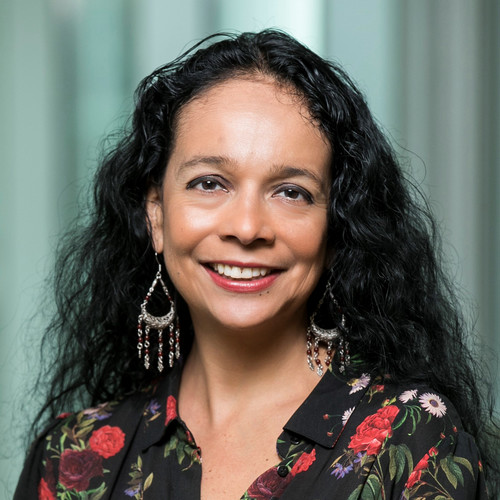
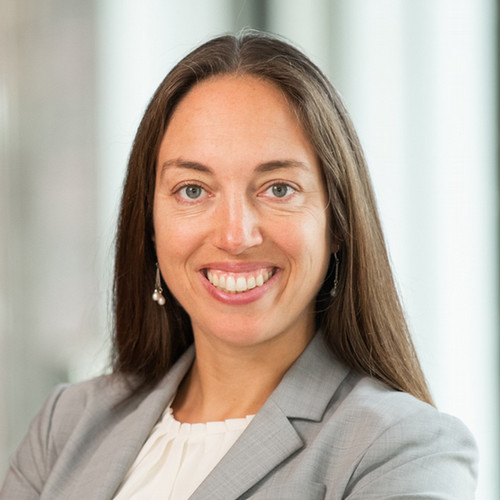
Portrait of Guadalupe Correa Cabrera

"U.S.-México Border Security Risks Today: A 'New Generation' of Criminal Networks" by Guadalupe Correa-Cabrera, Ph.D. 


Recording

About the topic: 

Dr. Guadalupe Correa-Cabrera will address general trends in organized crime in México and the main security risks at the U.S.-México borderlands today. She will also discuss risks at the hemispheric level and a new generation of criminal networks, whose characteristics seem to be driving militarization on both sides of the border.


About the speaker:  

Guadalupe Correa-Cabrera is a Professor in the Schar School of Policy and Government, and co-director of the Terrorism, Transnational Crime and Corruption Center (TraCCC) at George Mason University. Her areas of expertise are border studies, U.S.-México relations, international security, migration studies, and illicit networks. She has authored several notable books, including Los Zetas Inc.: Criminal Corporations, Energy, and Civil War in México (2017; Spanish edition published in 2018) which examines the intersection of criminal organizations and economic interests in México. Her other works include Democracy in “Two Méxicos”: Political Institutions in Oaxaca and Nuevo León (2013) and, more recently, Frontera: A Journey across the U.S.-México Border (co-authored with Sergio Chapa in 2024). Her most recent books in Spanish are Las Cinco Vidas de Genaro García Luna (The Five Lives of Genaro García Luna) and La Guerra Improvisada: Los Años de Calderón y sus Consecuencias (The Improvised War: Calderón’s Years and Consequences), both co-authored with Tony Payan and published in 2021.

Professor Correa-Cabrera has also co-edited publications, such as North American Borders in Comparative Perspective, and serves as co-editor of the journal International Studies Perspectives (Oxford University Press). She is a past President of the Association for Borderlands Studies (ABS) and has been involved in significant research projects supported by various government agencies and foundations, including serving as the Principal Investigator for a study on organized crime and trafficking in persons in Central America and México’s eastern migration routes, funded by the U.S. Department of State’s Office to Monitor and Combat Trafficking in Persons.

She is a frequent commentator on issues related to Mexican politics, U.S.-México (border) relations, immigration, drug trafficking, and other forms of transnational organized crime in various media outlets. She currently conducts research on human smuggling and transnational crime networks and is writing her upcoming book titled Coyotes LLC. Professor Correa-Cabrera was a Fulbright U.S. Scholar in México and Visiting Scholar at El Colegio de la Frontera Norte in Tijuana in 2014-2015. She is now a Distinguished Visiting Scholar at the John Sloan Dickey Center for International Understanding at Dartmouth College (Fall 2025).