TAMIU Advances Open Bookshelf Initiative to Expand Multilingual Literacy Access
Texas A&M International University (TAMIU), through its Office of Global & Community Engagement, is advancing the Open Bookshelf Initiative in collaboration with FEdu, Laredo Independent School District, Laredo Learns, and regional tutors, literacy centers, and community organizations to expand access to high-quality multilingual literacy resources for learners of all ages.
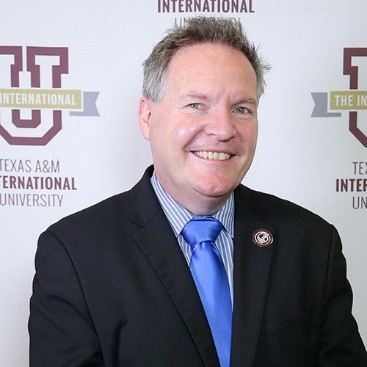
The initiative is designed to expand educational access and strengthen literacy development through innovative, community-centered learning opportunities supported by ethical AI integration, said Dr. James O'Meara, TAMIU dean of Global and Community Engagement.
“This initiative represents an important step in connecting literacy development, ethical AI innovation, and community engagement in ways that expand educational opportunity for learners across languages and backgrounds,” O’Meara said, “Our goal is to ensure that students and families in Laredo have direct access to high-quality, globally informed educational experiences that support lifelong learning and literacy development.”
The initiative reflects TAMIU’s role as a social catalyst by strengthening connections across the region, state, nation, and the world through innovative educational opportunities for students, educators, families, and communities, O'Meara said. The Open Bookshelf Initiative is designed to provide transformational international learning experiences through an open educational resource model that removes traditional barriers related to cost, travel, and accessibility, he added.
The platform can be accessed at reader.fedu.ai, and offers a free, always-accessible digital library of bilingual and multilingual books supported by AI tools that enhance literacy development, comprehension, and learner engagement. The initiative follows a privacy-first approach and does not require users to create accounts, provide personal information, or share identifiable data to access materials.
"The initiative supports emergent multiliteracy development by recognizing that reading, writing, speaking, and listening skills are strengthened through multilingual engagement," O'Meara said, "This approach is particularly impactful for emergent bilingual learners while remaining inclusive of all linguistic backgrounds."
Each book within the Open Bookshelf includes bonus materials featuring an AI-supported tutor designed to guide learners through reading activities using High-Impact Tutoring strategies recommended by the Texas Education Agency. The platform also includes comprehension checks, vocabulary development tools, Socratic questioning, curriculum-aligned learning activities, and game-based learning modules across literacy, science, and math.
A key feature of the initiative is the Border Bridge Series, a collection of culturally relevant stories centered on Laredo and life along the U.S.–Mexico border. The series was intentionally developed to align with Texas Education Agency High-Quality Instructional Materials expectations, combining locally meaningful content with academically rigorous instructional practices, O'Meara said.
"Through collaboration with regional education leaders, the initiative integrates data-informed reading assessment practices aligned with MAP and Lexile-based reading levels to support personalized literacy instruction," O'Meara said.
"The initiative also helps address book deserts by expanding access to high-quality multilingual reading materials at no cost to families," he said, "By supporting families as first educators, the platform promotes early literacy development, vocabulary growth, and school readiness."
Planned pilot implementations, including summer learning programs, will continue refining the integration of AI-supported literacy tools with classroom instruction and assessment systems, O'Meara said.
For more information, please contact Dr. O'Meara at 956.326.2680 or email james.omeara@tamiu.edu