Welcome to the College of Arts & Sciences
"Colleges . . . can only highly serve us, when they aim not to drill, but to create;
when they gather from far every ray of various genius to their hospitable halls, and, by the concentrated fires, set the hearts of their youth on flame."
Ralph Waldo Emerson, "The American Scholar"

TAMIU Planetarium & the Lamar Bruni Vergara Science Center
News in COAS
- Congratulations to Faculty Award Winners -- Dr. Anna Cieslicka, Dr. Bonnie Rudolph, and Dr. Frances Bernat! For the first time, the University Scholar of the Year Award and the University Teacher of the Year Award went to faculty not only in the same department but in the same discipline -- psychology! Congratulations to TAMIU Scholar of the Year, Dr. Cieslicka, Assistant Professor of Psychology, and to the TAMIU Teacher of the Year, Dr. Rudolph, Professor of Psychology! Both were COAS award winners, along with Assistant Professors of Biology, Dr. Michael Kidd, a COAS Scholar of the Year, and Dr. Brittan Wilson, a COAS Teacher of the Year. Dr. Bernat, Professor of Criminal Justice and Chair of the Department of Public Affairs & Social Research, was honored as a leader in her field at a March 16 awards reception hosted by the Minorities and Women Section of the Academy of Criminal Justice Sciences at its annual convention in New York City. At the reception, she received the Coramae Richey Mann Leadership Award
- What is the value of a liberal arts education from COAS? .......JOBS! According to a recent survey of employers, graduates with liberal arts degrees are among the most sought after new hires, even more than students in accounting and finance. Of all the job skills most coveted by employers, communication skills continue to rank at the very top of the list and are, of course, skills emphasized in a liberal arts curriculum. Read more about it: Millennial Hiring Highlights. Read the answer given by deans from across the nation: Conference of Colleges of Arts & Sciences' Statement on Liberal Education .
- More freedom to customize your degree! Bachelor of Arts degrees in 2012-2013 will provide students with greater intellectual range and freedom. B.A. degrees will have more electives. Minors will also become optional, providing even more opportunities to take electives.
- New Master of Arts Degrees in Fall 2012: M.A. in History & Political Thought and M.A. in Language, Literature, and Translation.
- Recent Retirements: Dr. Rex Ball (History), Dr. Mohamed Ben-Ruwin (Political Science & Public Administration), Dr. Carlos Cuellar (History), Dr. Cecilia Garza (Sociology), Dr. Jaclyn Jeffrey (Anthropology), and Dr. William Riggs (Political Science & Public Administration). Your colleagues and students thank you for your many years of dedication and service!
Mission Statement
The College of Arts and Sciences is the University's largest and most comprehensive academic unit. The College enjoys a broad mission in teaching, research, creative activities, and service to our international community. The College prepares students to:
- Think critically and communicate effectively
- Increase their knowledge base and appreciate the global nature of their world
- Participate actively in their education through collaboration with faculty in research and professional activities
- Become involved as leaders in their communities
- Pursue postgraduate and professional degrees in a variety of fields
Our graduate programs produce quality professionals with advanced technical and research skills who are dedicated to their discipline and have a desire to improve society.
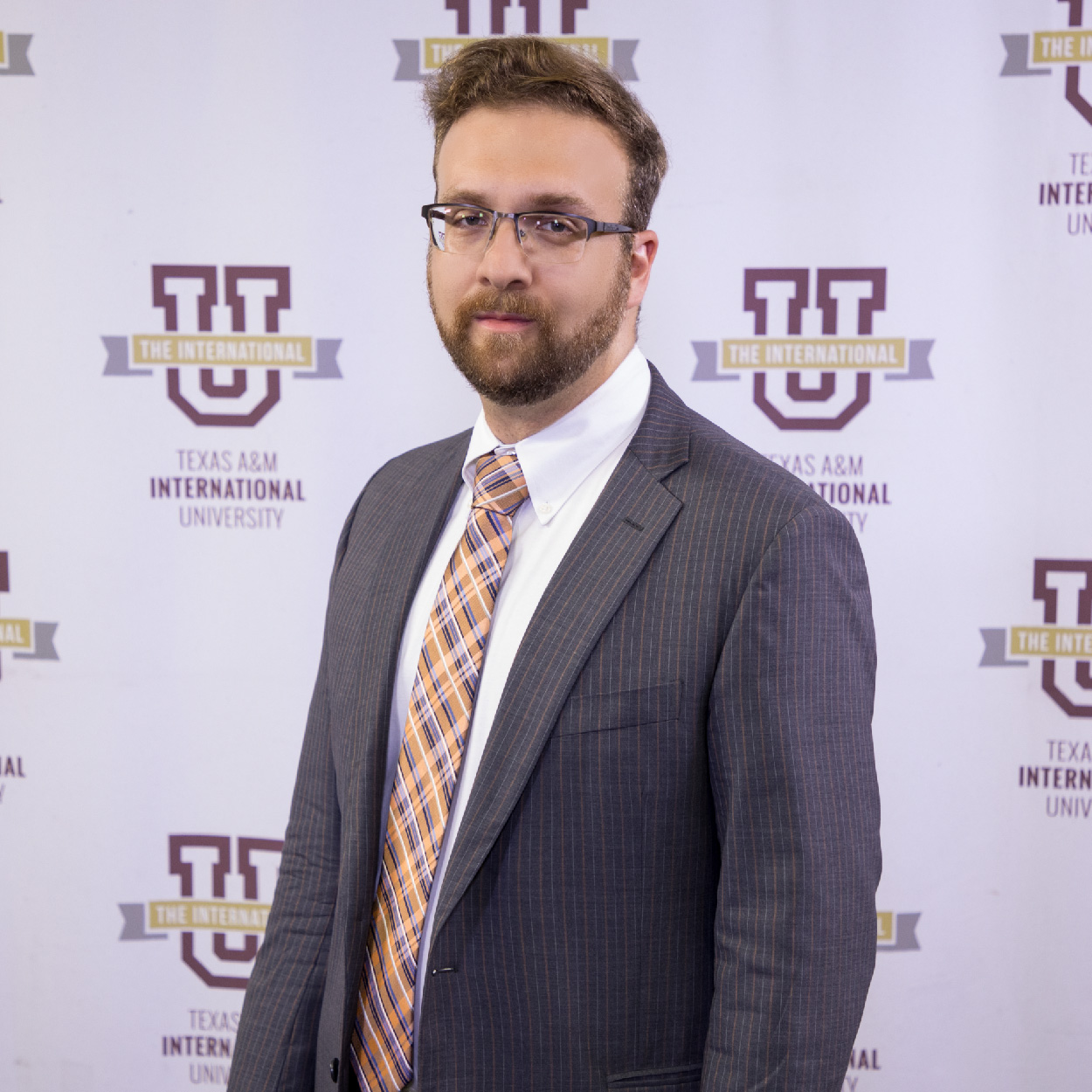
College Deans
LBVSC 301A |
"Welcome to the College of Arts & Sciences! Our college represents our university’s commitment to being an “international” university intent on providing students with a global perspective. We bring the world to our students. Our faculty come to us from a total of 22 different native countries - Bangladesh, Brazil, Canada, China, Colombia, England, Ghana, India, Iran, Iraq, Japan, Jordan, Korea, Lebanon, Mexico, the Philippines, Poland, Spain, Sri Lanka, Taiwan, Vietnam, and, of course, the U.S.A! Our college is the heart of higher education. We provide the core curriculum classes that provide every student with a liberal arts education. We offer degree programs in the fine and performing arts, sciences, humanities, social sciences, behavioral sciences, mathematics, and engineering. In all, students may choose from 35 undergraduate majors, 32 undergraduate minors, and 12 graduate degrees. In collaboration with Texas A&M University, we also offer a Ph.D. in Hispanic Studies. With both undergraduate and graduate education, our college’s goal is to provide students with the opportunity to acquire the knowledge and the intellectual and professional skills necessary for a fulfilling and productive life in a global society. |
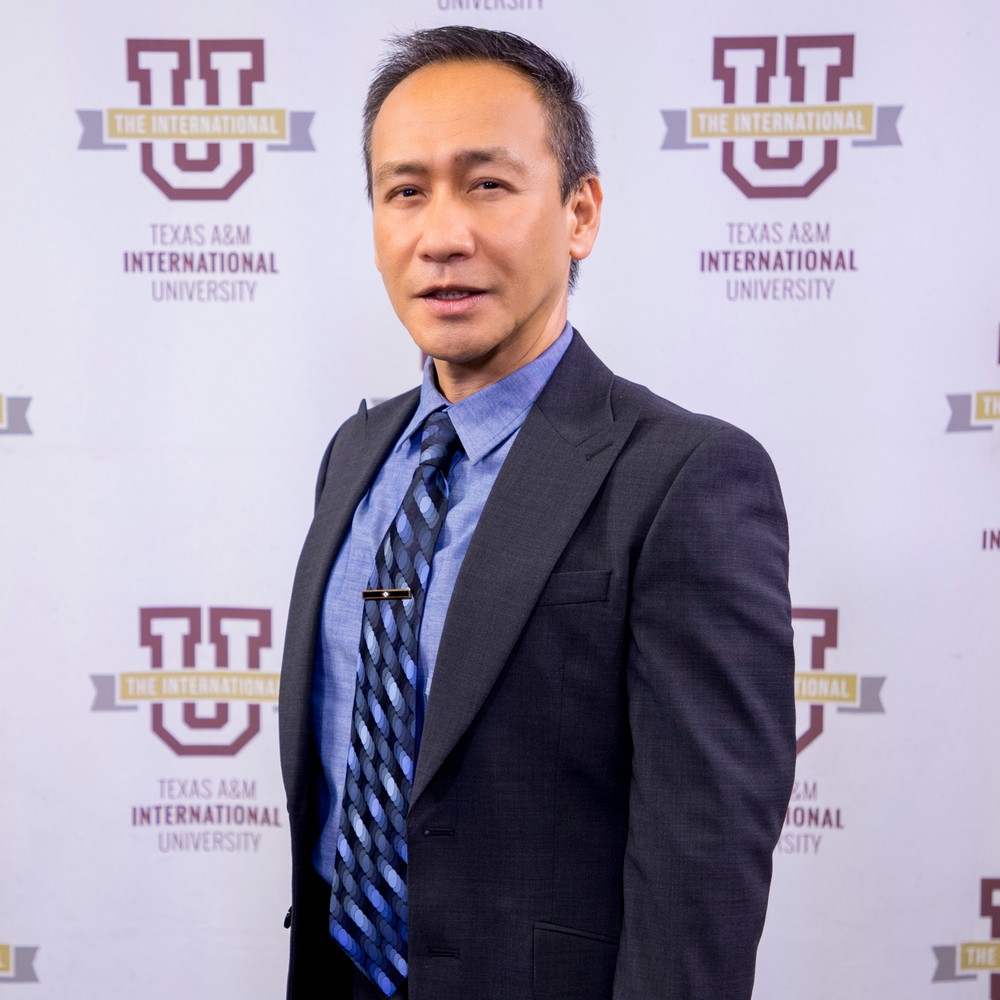
Dr. Kevin D. Lindberg LBVSC 301C |
" Welcome to the College of Arts and Sciences Web Site. While a liberal arts education is designed to help students acquire skills in communication, critical thinking, and other areas important to future success in their chosen fields, it also exposes them to experiences and ways of thinking they might not otherwise encounter – and thus helps them develop the wisdom to become thoughtful and effective world citizens. Providing our students such an education is a serious mission for us, and we are pleased that our outstanding faculty and programs work to make it happen." |
Dr. Daniel Mott LBVSC 312C |
" Welcome to TAMIU and the College of Arts & Science. The other department chairs and I, along with the faculty, take great pride in the growth of our university and the success of our students. At TAMIU growth and change seem to be the norm. Growth can be disconcerting to some and we work to see that, no matter the changes, students remain our top priority. We appreciate the importance that education has in everyone’s life, not only for financial reward, but to create happy and meaningful lives." |
Office Contact Information: College of Arts and Sciences |
Ms. Hilda V. Dennis
|
Ms. Claudia S. Herrera
|


Dr. Thomas R. Mitchell